Classroom Success
The Faculty
Resource Center
Guides, tools, and resources for using AI in your teaching, research and scholarly writing.
FACULTY EARLY ACCESS
Faculty access to CoCounsel Legal's next generation arrives September 14
Starting September 14, you have early access to the next generation of CoCounsel Legal. Your students won't see it until 2027, giving you time to explore and get comfortable with it first.
A toggle lets you switch between the next-generation version and the classic version at any time — so you can explore and compare while still having access to the version currently available to students.

COCOUNSEL LEGAL
What's different in this release of CoCounsel?
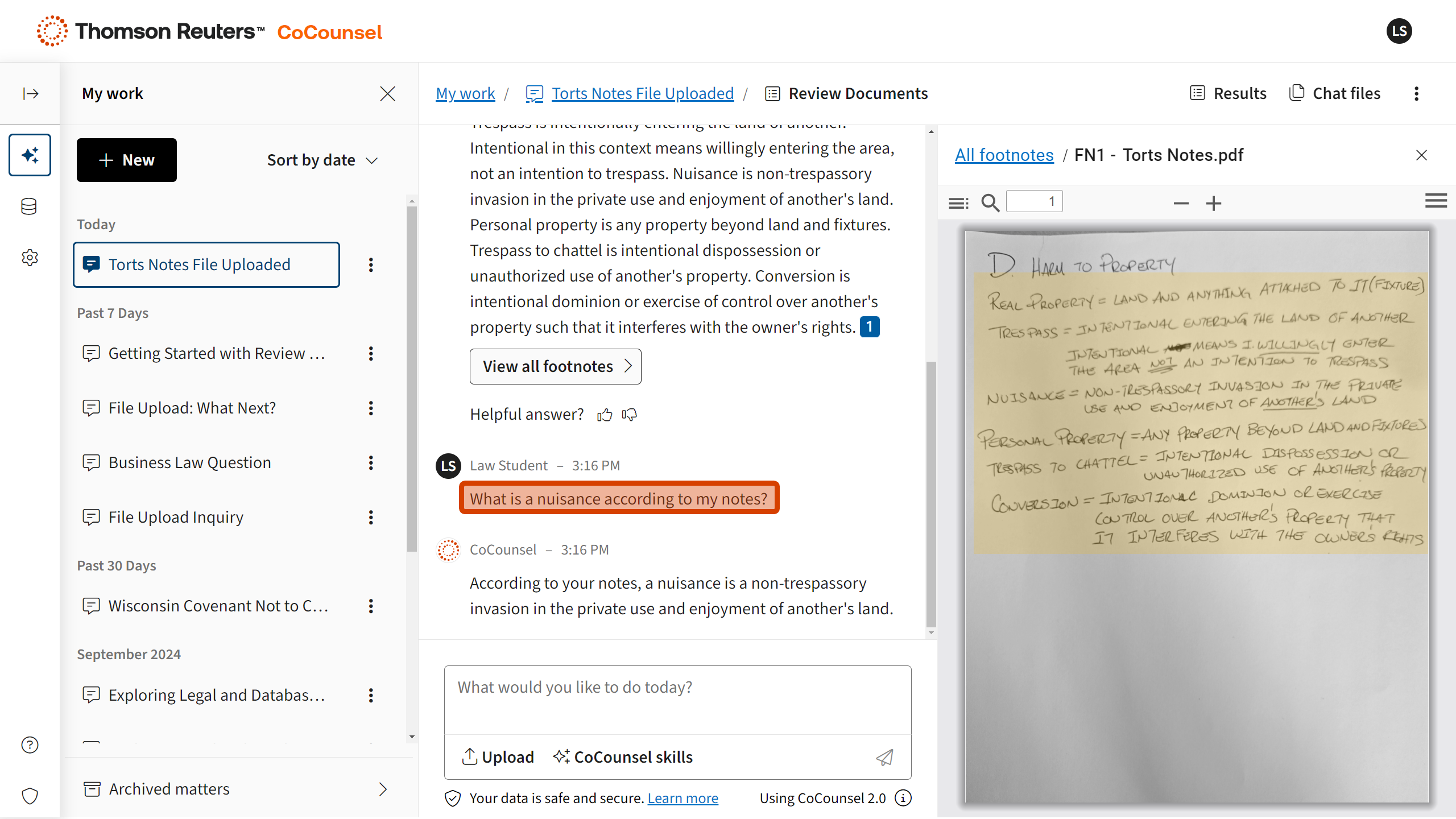
Fiduciary-Grade AI: A different category of AI that's built for the way legal professionals work and grounded in sources that matter.
CoCounsel plans the right approach based on what you describe — no more picking skills from a list of specialized tools.
Every answer is grounded in Westlaw and Practical Law — backed by citations and linked to its source.
The reasoning path is visible from start to finish — so there’s no black box and no guessing where an answer came from.
Deep Research integrates advanced AI with trusted Westlaw and Practical Law content to deliver a comprehensive, multistep report that surfaces key precedents, relevant authorities, and unique insights, so you move from question to confident decision faster.
Reminder: Students stay on the classic version this fall and will move to the next generation in 2027.
Webinars
Faculty Webinar Series
As generative AI reshapes legal practice, you're facing new questions about student preparation, professional responsibility, and ethical boundaries. This webinar series cuts through the complexity, giving you practical insights, clear guidance, and proven resources for teaching AI competency to future lawyers. Explore critical topics from AI fundamentals and ethical dilemmas to disclosure duties and emerging standards.
Access recordings, recaps, and classroom resources below:
NEW! AI 101: Why AI Creates Ethical Dilemmas for Lawyers
Thursday, September 17th at 1PM EST
Click HERE to register.
Artificial intelligence is rapidly becoming part of legal education and practice, but understanding how it works is essential to using it responsibly. Join us for Session 1: AI 101 & Why AI Creates Ethical Dilemmas for Lawyers, a foundational webinar that explains generative AI in plain language, explores the ethical risks it can create for legal professionals, and helps attendees recognize early warning signs of AI over-reliance. Whether you're a legal educator, law student, practicing attorney, or firm leader, this session will provide practical insight into responsible AI use in the legal profession.
Orienting 1Ls to AI: Tools, Ethics, and Professional Judgment — Recording & Resources
Date/Time: April 8, 3 PM ET
Presenters: Kim Holst and Susan Chesler, Sandra Day O’Connor College of Law at Arizona State University
Click HERE to view the Recording, Classroom Exercises and PPT deck
As AI tools become more common in legal education and practice, law schools are considering how and when to introduce them to students. Professor Holst and Professor Chesler discuss why 1L Orientation is an appropriate starting point and how a principled innovation framework can guide faculty and administrators. They will share the Orientation session they created to introduce incoming law students to ethical and effective AI use in law school.
Citing or Acknowledging Generative AI? Emerging Rules from the GenAI Brain Trust — Recap
Date/Time: April 22, 1 PM ET
Citing or Acknowledging Generative AI? Emerging Rules from the GenAI and Citation Brain Trust
Presenter: Carolyn Williams, University of North Dakota School of Law
Click HERE to View the Recap.
As faculty and students increasingly experiment with GenAI for research, drafting, and brainstorming, questions about transparency and citation are evolving quickly. Professor Williams explains how the GenAI & Citation Brain Trust developed practical guidance on when to cite vs. acknowledge GenAI tools, and introduces a new citation format designed to avoid common pitfalls in existing approaches.
AI Disclosure: Duties & Discretion — Recording & Resources
Date/Time: April 29, 1 PM ET
Presenters: Dyane O’Leary and Colin Black, Suffolk University School of Law
Click HERE to View the Recording, Classroom Exercises and PPT deck.
Join Professor O’Leary and Professor Black for a practical session on teaching disclosure duties in the age of generative AI. Drawing on their experience in legal writing, professional responsibility, and legal technology, they will explore how disclosure obligations shift across contexts and when it may be required, when it is prudent, and when it may not be necessary. The session will introduce ready-to-use classroom exercises to help students start to develop professional judgment as to whether and how to disclose.
On-Demand Learning
Assign GenAI On-Demand Learning
Support your student's education and understanding of their new generative AI tools with our curated On-Demand Learning content. Assign helpful guides, tutorials, and professional development resources to ensure your students get the most out of their Thomson Reuters suite of generative AI products.

AI and Insights
Deep dives and fresh perspectives on AI
and the technology shaping the future of law.
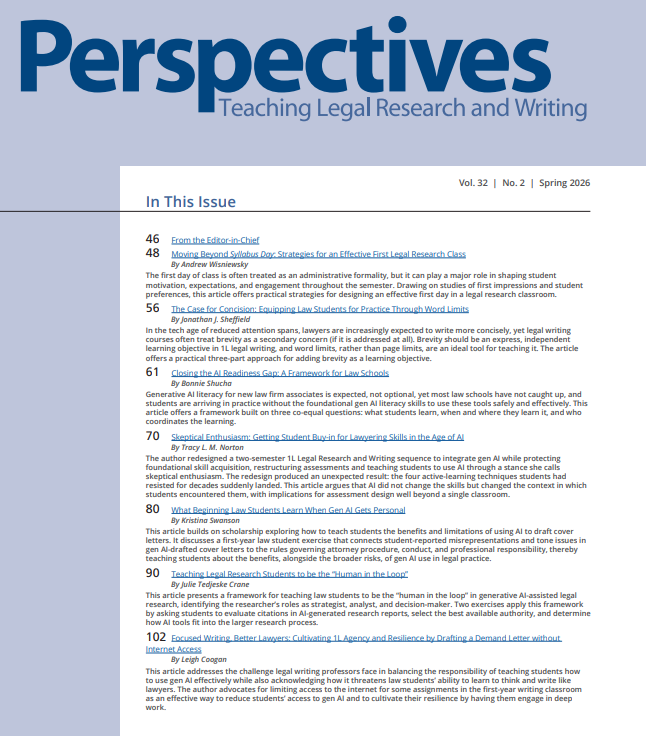
Vol. 32 | No. 2 | Spring 2026

Additional Information


Three Comprehensive Certifications

Basic

Intermediate

Advanced
Each Covering Seven Core Topics.

Cases

Statutes

Citators

Searching

Features & Tools

Secondary Sources

GenAI